Assumptions in Best Estimate Liabilities
You're an actuarial rock star! Outstanding work on the cash flows! In this lesson, let's take a look at the assumptions underlying them.
Best Estimate Liabilities are based on projections of future cash flows. Because the future is uncertain, these projections rely on assumptions. Assumptions describe how the insurer expects key drivers of cash flows to evolve over time and are therefore a crucial part of BEL calculations.
Best Estimate
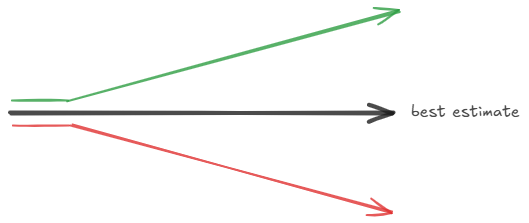
In Solvency II, assumptions used in Best Estimate Liabilities are referred to as best estimate assumptions. This means that they are intended to reflect expected future experience, based on available data and realistic expectations. They do not include safety margins or deliberate conservatism. At the same time, they are not chosen to be optimistic. The aim is to describe what is most likely to happen on average.
Assumptions
Mortality
Several types of assumptions typically have a significant impact on Best Estimate Liabilities. One important group relates to mortality and longevity. These assumptions describe the probability of death and survival over time and are especially relevant for life insurance and annuity products. They are often based on standard mortality tables, adjusted to reflect the insurers own experience and expectations about future trends, such as improvements in longevity.
Lapse
Another key group of assumptions concerns policyholder behaviour, particularly lapse and surrender rates. These assumptions describe how likely policyholders are to terminate their contracts early. Lapse behaviour affects both future premiums and future benefit payments and can therefore have a material impact on BEL. Lapse rates often vary by product type and policy duration.
Expense
Expense assumptions are also an important part of BEL calculations. They describe the expected costs of administering and servicing insurance contracts, including claims handling and maintenance expenses. Expense assumptions may allow for different types of costs, such as regular ongoing expenses and one-off expenses, and often include expectations about future expense inflation.
Monitoring
It is important that assumptions used in BEL are internally consistent and appropriate for the portfolio being valued. For example, lapse assumptions should be consistent with product features, and expense assumptions should align with the expected level of operational activity. Assumptions are typically reviewed and updated regularly to reflect new experience, changes in products or operating conditions, and emerging trends.

Because BEL are sensitive to assumptions, changes in assumptions can lead to changes in Best Estimate Liabilities even if the underlying portfolio remains unchanged. Understanding and monitoring assumptions is therefore a key part of actuarial work under Solvency II.
With this lesson, we complete the introduction to Best Estimate Liabilities. In the next chapter, we will turn to the Risk Margin and explore how uncertainty beyond expected outcomes is reflected in the Solvency II balance sheet. But first, let's exercise!