What is the Solvency Capital Requirement?
Wow, we've already covered so much! We have explored both components of the Technical Provisions: Best Estimate Liabilities and the Risk Margin. In this chapter, we will cover the third main component on the liabilities side: the Solvency Capital Requirement.
Up to this point in the course, we have focused on the valuation of insurance liabilities. Best Estimate Liabilities capture expected future outcomes, while the Risk Margin reflects the cost of uncertainty over the lifetime of those liabilities. Together, they form Technical Provisions. However, even this comprehensive valuation does not fully protect an insurer against all risks. This is where the Solvency Capital Requirement, or SCR, comes into play.
Severe event within one year
The Solvency Capital Requirement represents the amount of capital an insurer must hold to withstand severe but plausible adverse events over a short time horizon. While Technical Provisions focus on long-term expectations and uncertainty over time, SCR focuses on the risk of large losses occurring within a single year. Its purpose is to ensure that the insurer can continue to meet its obligations even in very unfavourable circumstances.
A key feature of SCR is its one-year perspective. The question it addresses is not what might happen over the full lifetime of insurance contracts, but what could go wrong over the next year. This includes sudden market movements, unexpectedly high claims, adverse changes in policyholder behaviour, or operational failures. SCR therefore complements Technical Provisions by providing protection against short-term shocks.
1-in-200
The level of SCR is calibrated to a 99.5% confidence level over one year. This means that the insurer should be able to absorb losses and remain solvent in 199 out of 200 years. Only in a very extreme, 1-in-200 year event would losses exceed the Solvency Capital Requirement. This high confidence level reflects the strong policyholder protection embedded in the Solvency II framework.

It is important to understand what SCR is not. SCR is not an expected loss and it is not a reserve for normal fluctuations. It does not represent management’s desired buffer, nor does it replace Technical Provisions. Instead, SCR is a regulatory capital requirement designed specifically to cover extreme outcomes over a short horizon.
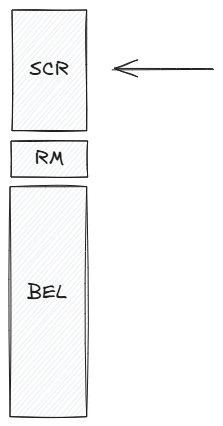
On the Solvency II balance sheet, SCR sits alongside Technical Provisions and is covered by the insurer's Own Funds. Comparing available Own Funds to SCR allows supervisors and stakeholders to assess whether the insurer holds sufficient capital to withstand severe stress scenarios.
In short, we will now move on to the risks covered by the SCR - but first, let’s practise!