Why do we need a Risk Margin?
Outstanding work on the BEL. Your best estimate shows that you're rocking it!
In the previous chapter, we focused on Best Estimate Liabilities and learned that they represent the expected value of future insurance obligations. BEL are a crucial part of the Solvency II balance sheet, but on their own they do not tell the whole story. Even when assumptions are carefully chosen and based on good data, actual outcomes will almost never match the expected value exactly.
Insurance liabilities are inherently uncertain. Claims may turn out higher or lower than expected, policyholders may behave differently than anticipated, and expenses may change over time. This uncertainty means that there is always a risk that future experience will be worse than the average outcome reflected in BEL. Solvency II explicitly recognises this fact and addresses it through an additional balance sheet element: the Risk Margin.
Transfer perspective
A useful way to understand the need for Risk Margin is to think about what BEL actually represent. BEL describe what the insurer expects to pay on average, assuming that reality unfolds as expected. They do not reflect the cost of bearing risk or the fact that capital must be held to protect against adverse deviations. From a solvency perspective, expected values alone are therefore not sufficient.
One intuitive way to think about Risk Margin is through a transfer perspective. Imagine that an insurance company wants to transfer its existing insurance liabilities to another insurer. The receiving insurer would not be willing to take over the liabilities for an amount equal to BEL alone. In addition to the expected value of future payments, it would require compensation for taking on the uncertainty and for having to hold capital against non-hedgeable risks over time. This additional amount is what Risk Margin is intended to represent.
Cost of holding capital
Another important aspect is that holding capital has a cost. Capital is tied up to protect against adverse outcomes and cannot be used freely for other purposes. Investors expect a return on this capital, and this expectation creates a real economic cost. Risk Margin reflects this cost of holding capital over the lifetime of insurance liabilities.
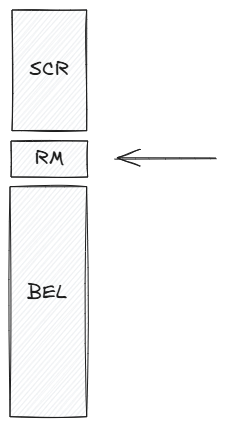
In the Solvency II balance sheet, Risk Margin therefore complements Best Estimate Liabilities. BEL capture expected future outcomes, while Risk Margin reflects the uncertainty around those outcomes and the cost associated with carrying risk. Together, they form Technical Provisions, which represent the full value of insurance liabilities under Solvency II.
Understanding why Risk Margin exists is an important step before looking at what it represents in more detail and how it is calculated. But before we continue, let’s practise!